By: Elle Shi, Grade 8
When people imagine a city, they often picture tall buildings, busy streets, and endless stretches of concrete. However, how can we take these green-lacking-cities to become “greener” without taking up more land? One solution has already been taken to the cities and above our heads: green roofs.
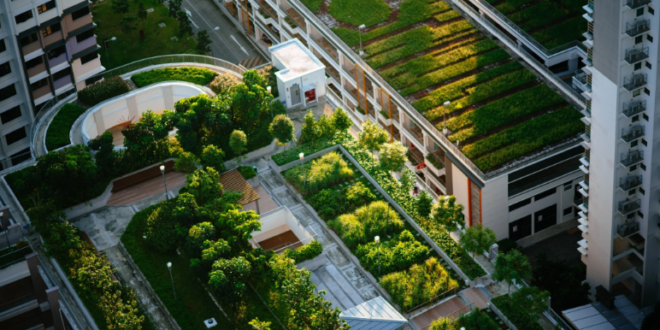
Green roofs are rooftops covered partially or completely with plants and vegetation. They can include grasses, flowers, shrubs, and even small gardens. Although they may look like a simple way to add nature to a city, green roofs can provide several important environmental benefits.
One of their biggest advantages is helping cities stay cooler. Concrete and asphalt absorb heat from the sun, causing cities to become significantly warmer than surrounding areas. This is called the urban heat island effect. Plants on green roofs can help cool the surrounding air and reduce the amount of heat absorbed by buildings.
Green roofs can also help manage rainwater. Instead of rain immediately running off a roof and into storm drains, plants and soil can absorb and hold some of the water. This can reduce flooding and lessen the pressure on drainage systems during heavy storms. Green roofs also provide habitats for insects and birds, bringing more beauty into the city without flooding the streets with animals.
One city that has already taken action into this movement is Singapore. Also known as the “City in Nature,” Singapore has invested in bringing greenery into its urban environment. Green roofs and rooftop gardens are part of the city’s efforts to create more sustainable and livable spaces. In a densely populated city where land is limited, rooftops provide an opportunity to add greenery without needing to build new parks at ground level.
As urban populations continue to grow, the future of cities may depend on finding creative ways to make room for nature, even in the busiest areas.