By: Sarah, grade 9
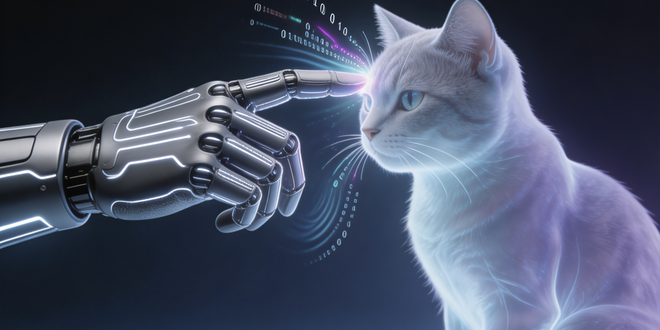
Imagine you are at a park. You call your best friend because you see her favorite British Shorthair. You then touch it and show your friend, and your best friend feels the soft fur and the unique texture instantly. Isn’t that incredible? This is actually called haptic technology. So today, I would like to walk you through its working process and its applications.
This technique is fundamentally divided into three stages: sensing, data conversion, and output.
Now, let us begin with the first section. Technicians use a special fabric that contains countless sensors. It consists of three layers: the cover layer, which touches other objects; the sensor grid, which is responsible for sensing physical objects; and the transducer, which needs to translate signals from the sensor grid into a language that computers can understand. There are two types of signals sensors need to detect: piezoelectric signals and heat flux. Piezoelectric signals are used for sensing texture, which, to be honest, is just like different amounts of force at different locations. Heat flux is related to the temperature of items. The temperature you perceive actually depends on the heat flux of the object. The higher the heat flux it attains, the more heat it can absorb from your skin, and the colder you will feel. Therefore, heat flux is also a crucial piece of information for haptic technology.
Next comes the second phase: data management. It starts with multimodal alignment, meaning that it will align piezoelectric signals, heat flux, and other kinds of sensations together along a timeline. After that, computers will compress huge amounts of data, eliminating redundant sensations and packing them into a haptic profile. Finally, this refined data will be provided to AI to allow automatic analysis. It can effectively make preparations for the next output step.
The final phase is output. Some professional actuators, such as small motors, are woven into special gloves. Haptic engines calculate the force or vibration they need to apply based on the location of the hands and the properties of the object. Then, digital signals are turned into electrical signals through a DAC (a special converter) and delivered to micro actuators. The slight vibrations and temperature changes will make individuals feel like they are truly touching something. Even when only using the glove, they can guess what it is simulating.
All in all, haptic technology seems easy to understand; it consists of three main stages: sensing, data conversion, and actuation. Scientists have already used this system to create a vast range of applications, such as VR games, surgical robots, and special fabrics used on Dexterous Hands. So next time, I would like to introduce different applications based on haptic technology.