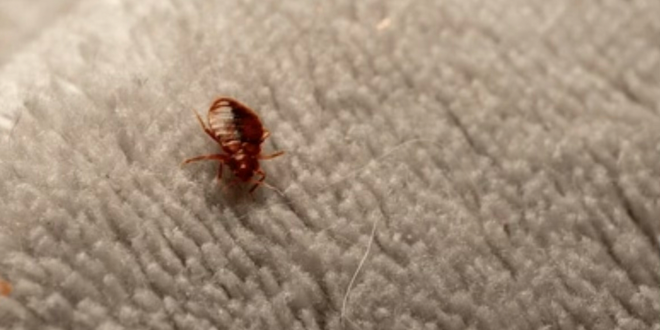
By Sofia Pan, Grade 9
In the 1950s, humanity nearly eradicated bed bugs (Cimex lectularius) with heavy-duty chemicals like DDT (dichlorodiphenyltrichloroethane). For decades, they felt like an archaic myth from the nursery rhyme, “Good night, sleep tight, don’t let the bed bugs bite.” But by the 2000s, they launched an astonishing global comeback.
They pulled this off through lightning-fast evolution. When dangerous historical chemicals were phased out for milder sprays including pyrethroids, these new treatments targeted the exact same nerve pathways. The few bugs with natural genetic quirks survived our chemical attacks, selectively breeding into an exponentially tougher, stronger, and intensely pesticide-resistant population. Boosted by global air travel, these modern super-bugs spread worldwide, armed with shells up to fifteen percent thicker, mutated nerve receptors poisons can’t latch onto, and hyperactive detoxifying enzymes that chemically dismantle incoming insecticides into harmless waste before the toxins can ever reach their nervous system.
Despite this formidable armor, there is no reason to panic. Bed bugs are roughly apple-seed-sized, and they do not spontaneously generate in dirty rooms. They are purely hitchhikers, carried in on luggage, thrifted furniture, or through shared apartment walls.
More importantly, they are completely harmless to your physical health. Laboratory tests prove they cannot transmit infectious diseases. While their bites leave itchy red welts from numbing salivary proteins, the real toll is psychological—the insomnia and anxiety of knowing a pest is hunting while you sleep.
Realizing that bed bugs pose no mortal threat changes how we approach them. Banning chemicals like DDT taught us the danger of trying to poison an entire species out of existence with toxic chemical warfare that damages our wider environment. Total eradication shouldn’t mean turning our bedrooms into chemical hazard zones. Still, because they multiply rapidly and turn our sleeping spaces into feeding grounds, sharing a bed isn’t an option most people want to live with. If you do find uninvited guests, there is no need to wage a toxic chemical war; simple physics will do the job quietly and cleanly. Bed bugs have no internal temperature control, meaning a high-heat laundry cycle destroys them and their eggs within twenty minutes, while non-toxic amorphous silica dust naturally dehydrates any stragglers in the walls. Approaching them with cool science rather than blind terror is the real secret to sleeping tight.