Sarah, grade 9
Previously, we explored the core architecture of haptic technology—spanning sensing, data conversion, and actuation. Today, I would like to introduce its applications.
Haptic technology is already utilized in robotics, medicine, and gaming.
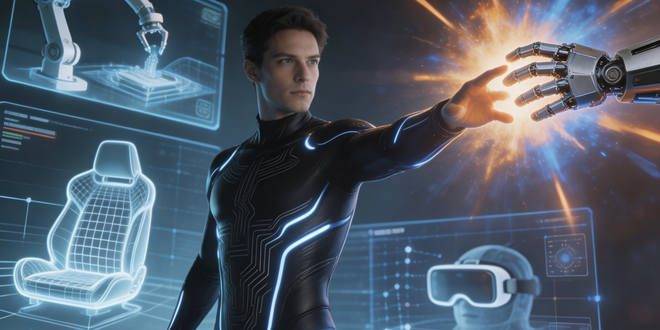
In robotics, haptic technology effectively improves the stability of grasping objects. For example, through a vast amount of data, Dexterous Hands know where the best place is to grab a bottle, recognizing where they touch the bottle. So when they have only a small contact area, dexterous hands will adjust their force and posture, which can avoid many errors, leading to a higher success rate.
In medicine, haptic systems enable surgeons to conduct operations online at ease. There is a special master controller in the Da Vinci Surgical System that uses data gathered during real surgical operations to give feedback to doctors when he or she is removing tissue or suturing remotely. So they can feel the tension and reaction force of the tissue. This innovation not only assists surgeons in complex operations, but also saves many lives of patients who are unable to be transported to another city for surgery.
Next comes the most intriguing aspect: gaming. As we all know, there are many VR headsets we can use to gain an immersive experience or even communicate, such as Apple Vision Pro. Imagine in the future, you can hear sounds, view scenes, and feel textures in your game. A suit makes this real: the Teslasuit. It can capture full-body motion and predict the next movements of the user by using more than 14 IMU sensors. It then provides electro-haptic feedback using EMS and TENS. Also, by using Peltier elements, it can simulate wind, snow, or fire.
Another application is remarkable as well. It can analyze the tactile sensation of car seats and implement biometric comfort evaluation, so as to give customers more precise and reliable vehicle data and avoid exaggerated advertising. It improves passengers’ comfort when traveling. Because the texture of seats can also influence the driver’s state while driving, better temperature and tactile feedback may even prevent muscle fatigue.
In the past, online communication could only transmit images and sound. Now, people are exploring tactile transmission, once again breaking down spatial boundaries. We have already explored three senses, leaving the olfactory and gustatory senses to be developed in the future. Let’s step into the new era of online communication with great anticipation!