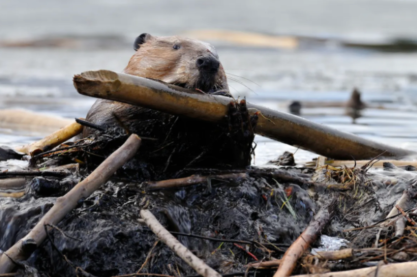
Whilst you may not think about beavers when thinking about animals that help shape the environment, these industrious rodents have an amazing ability to change whole landscapes! They work by building dams which creates wetland areas that provide homes for many different species. As such they are known as ecosystem engineers.
The dams are built using twigs, branches, mud and rocks. This causes the water to slow down and form ponds. This helps create a new environment. The ponds provide habitats for many different species such as fish, amphibians, birds, insects and aquatic plants (National Park Service). An area that was once just a stream can now be a complex ecosystem.
The dams also provide many positive impacts on the environment. Slowing down the movement of the water allows more of the soil and sediments to settle. This can improve water quality and reduce erosion. The ponds act as a water storage area and help to recharge the groundwater around the area. During dry periods, this can provide vital water sources for wildlife around the area helping the surrounding ecosystems to be healthier.
Interestingly the dams can help make ecosystems more resilient to changes in the environment. Wetlands created by beavers can help keep water conditions stable in the local area during climate changes (Annual Review of Ecology, Evolution, and Systematics, 2024).
However, they can cause some negative impacts on some environments. Sometimes they can cause flooding to roads, damage trees and impact the water conditions negatively on some aquatic species.
Beavers show that we do not always need complex technology to protect the environment. Sometimes letting nature do what it needs to can lead to amazing results! These little engineers show that even one species can have a massive impact on the health of an ecosystem.