By Sofia Pan, G9
“One Mississippi, two Mississippi, three Mississippi…” Was this what you used to count down during a hide-and-seek game when you were a kid? The four-syllable word has long dominated the approximation of one second, which, according to the International System of Units, is 9,192,631,770 cycles of caesium-133 (an isotope of caesium, which switches between two energy states at a regular rate when exposed to microwave radiation).
Yet not for any longer. The definition of a second is soon to be redefined by the International Bureau of Weights and Measures (BIPM).
Caesium operates in the microwave spectrum at a relatively slow rate compared to newer standards. The change is driven by two main limitations of caesium’s relatively slow microwave frequency: first, any single miscounted or misread cycle has a larger impact on overall accuracy. Second, scientists cannot further divide time into tinier, more stable units for more accurate calculation needs.
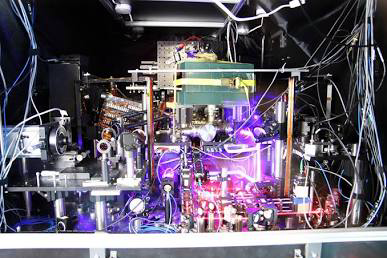
As a result, by 2030, the current caesium microwave clocks will likely be replaced with vastly more accurate optical atomic clocks, allowing higher precision, improved navigation technology, and more advanced physics research. The good news is, when the definition changes, you are not likely to notice, as it is still consistent with the current definition of the second. It will just be much more precise than before.