By Mitchell Cui, Grade 7
For years, the autonomous vehicle industry promised a future that always seemed to be just around the corner. In April 2026, that corner was finally turned.
On April 18, Tesla activated fully unsupervised robotaxi rides in both Dallas and Houston, Texas. Unlike earlier pilots that began with safety monitors in the front seat, the Dallas and Houston rollout features no human supervision whatsoever — riders hail a vehicle through the Tesla app and travel within defined geofenced zones without any driver or safety operator present. Tesla CEO Elon Musk confirmed it as a fully commercial operation, open to the public.
It’s a milestone that would have seemed like science fiction a decade ago. But Tesla is far from alone. The Robotaxi industry is experiencing a global surge, with companies racing to prove not just that the technology works, but that it can actually make money.
Chinese autonomous driving company Pony.ai used the Auto China 2026 show in Beijing to lay out its path to profitability. After expanding its fleet from 270 vehicles to more than 1,400, and achieving a 70% reduction in bill-of-materials cost for its autonomous driving kit, the company has reached unit-economics breakeven in two of Southern China’s largest economic hubs. That’s the number the entire industry has been chasing — proof that driverless rides can be delivered cheaply enough to compete with human-driven alternatives.
The global footprint is expanding rapidly. In March 2026, WeRide and Uber commenced robotaxi commercial services in Dubai — the city’s first publicly available autonomous fleet, with passengers hailing rides via the Uber app in popular tourist areas. In April, WeRide and Southeast Asian super-app Grab launched the first public autonomous ride-hailing service in Singapore.
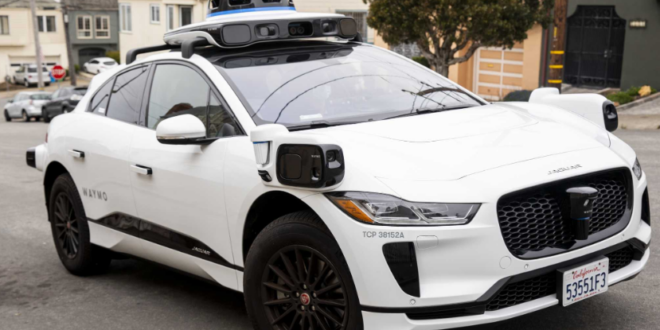
Meanwhile, Waymo — widely considered the technology leader in space — has been quietly building one of the most extensive autonomous networks in the world. As of late 2025, Waymo was operating in Phoenix, the San Francisco Bay Area, Los Angeles, Austin, and Atlanta, with announced expansion into 24 more metropolitan areas.
The economics of getting here have been staggering. Tesla’s $25 billion capital expenditure plan for 2026 includes substantial investment in its purpose-built Cybercab, a vehicle with no steering wheel or pedals, designed specifically for autonomous operation. It’s a bet that autonomous ride-hailing will become one of the company’s core revenue streams — though one that requires patience, with meaningful returns not expected before 2027.
The bigger picture is one of a technology crossing a critical threshold. By one count, highly automated vehicles are now on the roads in 103 cities globally, intermingling with around 310 million people on a daily basis. The driverless city isn’t coming. In many places, it’s already here.