By: Elle Shi, Grade 8
When people think about climate change, they often imagine forests and trees absorbing carbon dioxide from the atmosphere. However, there are some other ways to reduce carbon dioxide in the atmosphere other than from trees that are not even found on land at all. These are called carbon sinks, and the ones that we are going to debrief are found along the world’s coastlines. This is known as blue carbon, which refers to the carbon captured and stored by coastal and marine ecosystems such as mangrove forests, seagrass meadows, and salt marshes.
Just like trees, these ecosystems absorb carbon dioxide through photosynthesis. The difference is that coastal plants can store large amounts of carbon in the soil and sediment beneath them. When plants die, some of their carbon becomes buried underwater, where it can remain trapped for hundreds or even thousands of years. Because of this, blue carbon ecosystems play an important role in the long term of slowing the buildup of carbon dioxide, a major greenhouse gas, in the atmosphere.
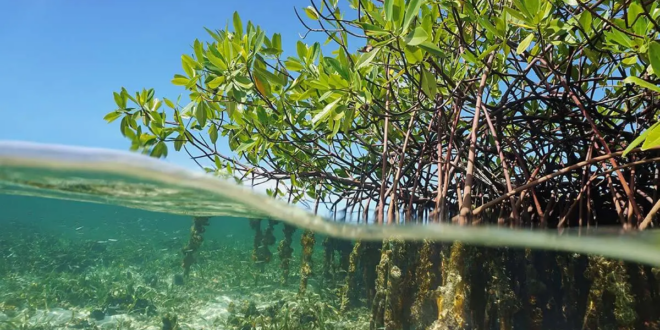
Mangrove forests are one example of an important blue carbon ecosystem. These trees grow along tropical and subtropical coastlines and have tangled root systems that help trap sediment and carbon. Seagrass meadows, which grow underwater in shallow coastal areas, also capture carbon while providing shelter and food for many marine animals. Salt marshes, found along coastlines around the world, absorb carbon and help protect nearby communities from flooding and erosion.
Protecting these ecosystems is important not only for fighting climate change but also for supporting healthy oceans and coastal communities. Mangroves, seagrasses, and salt marshes provide habitats for fish, birds, and other wildlife. Unfortunately, blue carbon ecosystems are being damaged by coastal development, pollution, rising sea levels, and other human activities. When these ecosystems are destroyed, the carbon they have stored can be released back into the atmosphere, contributing to climate change instead of reversing it.
Blue carbon shows that the ocean and its coastal ecosystems are more than just beautiful parts of our planet. They are natural climate solutions that quietly capture and store carbon while protecting wildlife and people. By conserving and restoring these ecosystems, we can help protect our coastlines and make a big contribution to a healthier and more sustainable future.