By: Mitchell Cui, Grade 11
Almost every rechargeable device in your life runs on the same basic idea. Lithium ions shuttle back and forth between two electrodes, swimming through a liquid electrolyte in between. That liquid has carried consumer electronics for three decades, and it is also the reason batteries swell, catch fire, and refuse to charge quickly in cold weather.
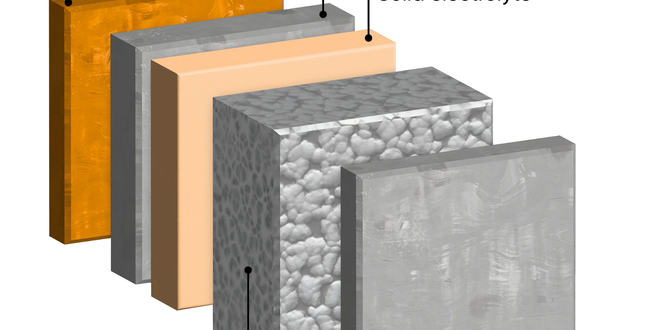
Solid-state batteries replace that liquid with a solid material, usually a ceramic, a glass, or a specialized polymer. It sounds like a small substitution. It is not. Removing the flammable liquid takes away the main fire risk. A solid separator also makes it possible to use a pure lithium metal an
ode, which stores considerably more energy in the same space than the graphite anodes used today.
The promised payoff is a battery that holds more charge, refills faster, lasts through more cycles, and behaves better in extreme temperatures. For electric vehicles, that combination would address the two complaints that keep buyers hesitant: range and charging time. For phones, laptops, and medical implants, it would mean smaller packs doing the same job.
The catch has always been manufacturing. Lithium tends to grow thin metallic spikes called dendrites during charging, and those spikes can punch through a solid separator and short the cell. Solid layers also need to stay in tight, even contact with the electrodes while the whole assembly expands and contracts thousands of times. Producing that consistently, at automotive scale, at a competitive price, is a much harder problem than making one impressive cell in a laboratory.
Progress is real but incremental. Automakers, battery specialists, and university labs have all demonstrated working cells, and semi-solid designs that keep a small amount of gel electrolyte are reaching vehicles as a stepping stone. Full commercialization keeps arriving a few years later than the previous forecast, which is a familiar pattern in battery research.
The technology is worth watching anyway. Batteries improve slowly and then reshape entire industries when they do. Whoever solves the manufacturing problem first will not just sell better cars. They will change what portable power can be built into.