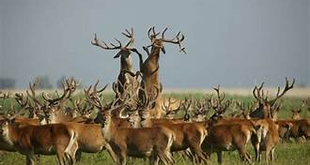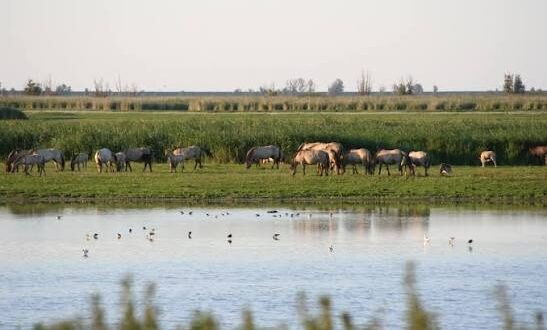
The area was created on reclaimed land in the 1960s. Instead of developing it into farmland or cities, conservationists allowed nature to shape the landscape. Large grazing animals, including Heck cattle, Konik horses, and red deer, were introduced to replace the ecological roles once played by extinct wild herbivores. Their grazing prevented forests from taking over, creating a diverse mix of grasslands, wetlands, and open woodlands.
Over time, Oostvaardersplassen became an important habitat for wildlife. Thousands of migratory birds now stop there each year, while many plant and animal species have flourished in the varied landscape. The project showed that ecosystems can become healthy and diverse with minimal human management.
However, the experiment has also sparked debate. During harsh winters, some large herbivores struggled to find enough food, leading to starvation and public concern. Critics argued that leaving animals without intervention was not humane, while supporters believed that natural population changes are part of healthy ecosystems. As a result, managers introduced new strategies, including population control and habitat improvements, to better balance ecological goals with animal welfare.
Oostvaardersplassen demonstrates that rewilding is not always simple. Restoring natural ecosystems requires careful planning, scientific monitoring, and public support. While challenges remain, the project has provided valuable lessons for conservation efforts around the world.
By allowing natural processes to play a larger role, Oostvaardersplassen has shown that rewilding can increase biodiversity and restore ecosystems. Its successes and challenges continue to shape how scientists and governments approach conservation in the twenty-first century.