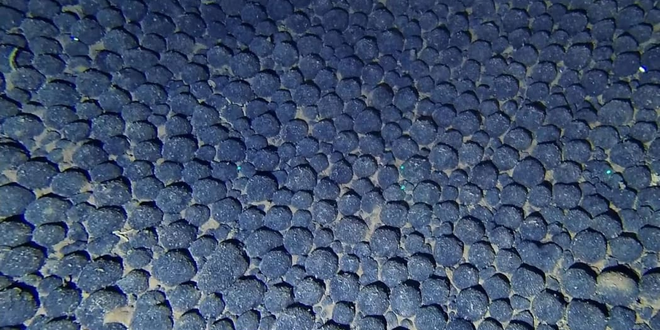
Although the Cook Islands only house around 15,000 people, less than an filled out NBA arena, under the surface of its two million square kilometer exclusive economic zone(EEZ) holds one of the most valuable seabeds on earth. Lying on the Penrhyn Basin, billions of metric tons of Polymetallic nodules contain a significant amount of minerals such as cobalt, nickel, and manganese which are essential to innovations such as electric vehicle batteries, renewable energy, and military technology. In a time where countries compete for resources and control, the size and community does not matter in front of the rocks that lie on the ocean floor. Due to this reason, when Cook Islands’ prime minister Mark Brown traveled to China and formed a partnership with them in February 2025 to cover economic cooperation with the seabed minerals, New Zealand stopped sending millions of dollars and responded with alert. This does not mean that Cook Islands is a small nation being manipulated by large superpowers, in fact it tells the opposite story. The Cook Islands is not a victim of the competitions for power and resources between countries but a participant who actively fuels the conflict.
The deal with China was an effort to improve self sustainability. Since Cook Islands are similar to other island nations where the majority of income comes from tourism, they struggle from export income and have a very vulnerable climate which means they are extremely dependent on other powers and have a great reliance on foreign aid. Prime minister Brown signed four major agreements with China: covering the strategic partnership, the blue economy, seabed minerals, and technical cooperation. These agreements are not betrayal or intended as a threat towards New Zealand but simply a chance to provide the country with more options. The deal also gained China’s support for infrastructure, financial fundings, and research on mineral exploration. Brown states that the deal with China does not replace their old relationships with other nations such as New Zealand, but acts as a counterpart that matches them. Brown tries to fulfill his vision of making The Cook Islands an independent nation who can rely on themselves when trouble comes instead of some poor island country who needs larger countries to feed them. This was shown through the absence of military supplies and the Chinese officials claimed to have nothing to do with their own security or defense. In the past, small Pacific nations having new partnerships are usually about surviving economically, not picking a side in a geopolitical competition.
Although Brown stated the collaboration was purely for independence, New Zealand still did not treat it as purely economic. New Zealand and Cook Islands have a special international relationship with them holding one of the strangest international laws. The law stated that Cook Islanders hold New Zealand citizenship and that they have the right to live or even work in New Zealand. This law also has Cook Islands rely heavily on New Zealand for national security and defense. The capital of New Zealand, Wellington, also contributes significantly to their annual development funding. Therefore, when Brown signed the agreements with China without informing New Zealand of its contents despite them agreeing to it quickly caused conflict between them. The Foreign Minister of New Zealand, Winston Peters, accused Cook Islands of not communicating before making the decision and removed their large economic funding of roughly NZ$18 million. This created a standoff between Cook Islands and New Zealand for a bit more than a year when the two countries signed a Declaration on Defense and Security in April 2026 which officially ended it. This Declaration restored around NZ$29.8 million of New Zealand’s funding annually. In return, Cook Islands stated New Zealand as their future primary partner in terms of defense and security. Brown, despite restoring their relationship, still stood firm on the agreements with China. These sequences of events demonstrate how pacific states and other powers’ economic agreements rarely stay economic.
The ocean floor under the Cook Islands further explains the reasoning of these matters. The seabed holds between 6.7 to 12 billion metric tons of polymetallic nodules which could be the second largest deposit of such minerals in the world. Super powers such as China, The United States of America(USA), and other European countries are competing to secure such resources found thousands of meters deep under the surface for cleaner energy and defense supply chains. Three exploration licenses were issued in 2022. In February 2025, there was a research agreement with China. Then, the United States established a cooperation on seabed mineral exploration within the Cook Islands’ EEZ in August 2025. Within 2025 Cook Islands had agreements with both China and USA. At the same time, seabed mining is still highly controversial which created a dilemma. In 2025, 32 countries advocated for the ban of seabed mining due to environmental reasons. Pacific states such as Fiji, Samoa, Palau, and Vanuatu also stood firmly against the extraction of seabed minerals, claiming that ocean health is important to their tourism based economy. The Cook Islands must find a way to balance the economic benefits of the seabed against the pressure from neighboring nations to leave it untouched.
The situation of The Cook Islands holds a lesson that can be applied beyond the Pacific region. Small nations with valuable resources and geography can exploit them to create an influence that transcends their small size in a world that is driven by multiple perspectives and influences. This can be achieved not only through military strength, but the manipulation and precise engineering of relationships between different competing interests and powers. The Cook Islands first engaged with China in agreements, then secured mineral cooperations with the USA, and finally mending the broken relationship between them and New Zealand. Through these carefully planned foreign relationships, The Cook Islands knitted a net of relationships and partnerships that cannot be easily broken. There were of course great risks in such exchanges such as the conflict with New Zealand which could bring heavy consequences to them, and some think that small nations do not have the ability to manage multiple superpowers at once. Despite these concerns, the outcome of The Cook Islands decisions show their careful engineering and control throughout the process. The fate of small Pacific nations will no longer be determined by the ambitions of China or the interests of the USA, but by how they choose to use what is hidden below the waters and what they are willing to negotiate in exchange for it.