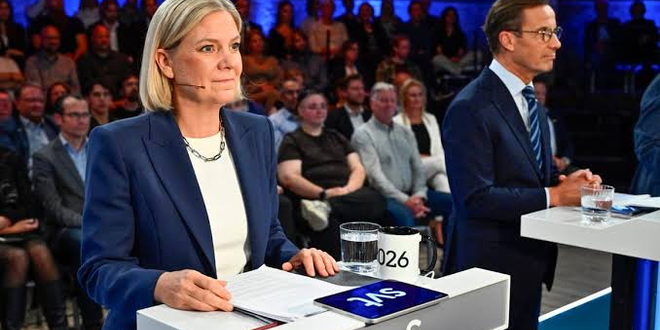
Sweden held its national parliamentary election on September 13, 2026, in a closely watched contest that could change the country’s government. The election was particularly significant because Sweden has experienced a shift toward stricter immigration policies and stronger support for the right in recent years.
Preliminary results on September 14 showed the center-left opposition narrowly ahead of the governing right-wing bloc. With about 95% of districts counted, the opposition parties were projected to receive 176 of the Riksdag’s 349 seats, compared with 173 seats for the parties supporting Prime Minister Ulf Kristersson’s government. However, the result was not yet final because additional ballots, including overseas votes, still had to be counted.
Former Prime Minister Magdalena Andersson, leader of the Social Democrats, could potentially return to office if her bloc maintains its lead and successfully forms a government. However, the four parties in the opposition have differences over issues such as immigration, taxes, and economic policy. This could make negotiations difficult even if they secure enough seats.
One of the election’s most notable developments was the performance of the Sweden Democrats, an anti-immigration party that has supported Kristersson’s government since 2022. Preliminary results showed the party receiving about 17.6% of the vote, down roughly three percentage points from the previous election. It also fell from being Sweden’s second-largest party to its third-largest.
The close result means Sweden could face weeks of negotiations before a new government is formed. The election also reflects broader debates across Europe over immigration, crime, economic policy, and the role of populist parties in government.