Sarah Grade 8
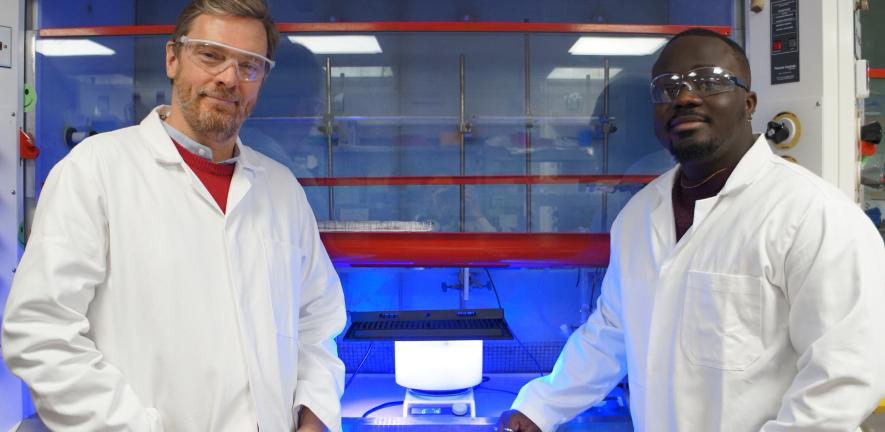
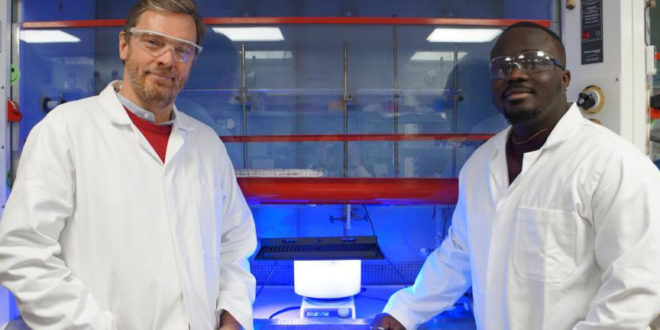
The current annual global plastic output has reached 500 million metric tons, and the total accumulated plastic waste has hit 12 billion tons. If this trend continues, the Earth will be surrounded by 12 billion tons of plastic waste by 2050. To put it more vividly, the world consumes 5 trillion plastic bags every year. But don’t worry — recently, a research group from the University of Cambridge developed a reactor that can turn trash into green energy.
The team invented a reactor that uses sunlight, combined with waste acid recovered from old car batteries, to convert plastic waste into clean hydrogen fuel and a high-value industrial chemical called acetic acid.
The process sounds simple, but the discovery was not easy. Acid has always been regarded as a “forbidden area” because its extreme corrosiveness can easily dissolve most catalytic materials. However, the team does not accept the common belief. They test a new type of solar catalyst and accidentally find that it remains stable in strong acid. Moreover, this new discovery is not only a breakthrough but also inexpensive.
After verifying the “acid resistance” ability of the photocatalyst, the team designed the “solar acid light reforming technology”. The procedure is divided into two main parts. The first is Decomposition. The reactor first uses the waste sulfuric acid recovered from the waste battery for acid-catalytic hydrolysis, and cuts the long polymer chain of the plastic into small molecules such as ethylene glycol. The process is just like you play the lego. First you need to use scissors or knives
(waste sulfuric) to open the paper box and mini plastic package (acid-catalytic hydrolysis), and then you will see a pile of different small lego pieces (small molecules). Another essential step is Transformation. Under sunlight, the previously developed special photocatalysts finally transform these small molecules into clean hydrogen and high-value industrial raw material acetic acid. Imagine you follow the brick instruction (sunlight) to build a castle (hydrogen and high-value industrial raw material acetic acid) and display it in your room.
However, the team still faces plenty of challenges. “The question now is engineering: how do we build reactors that can run continuously and handle real-world waste?” said lead author Kay Kwarteng, a PhD candidate who developed the photocatalyst. So far, this technology is still in the laboratory. To bring it to real life, there are risks related to cost and materials. What’s more, the reactor needs not only long-term sunlight but also temperatures up to 284°F, which increases safety concerns. Also, this process mainly works on PET and nylon — it cannot yet efficiently treat polyolefins (the materials used in plastic wrap, containers, etc.).
But overall, this invention has make a great impact. First, it promotes the reuse of plastic. By turning trash into green energy, it can be obviously applied in daily life — for example, large trucks and airplanes could use hydrogen fuel cells, and hydrogen could be mixed with natural gas to provide heat for buildings, reducing carbon emissions. Apart from the temperature issue, the invention is quite safe — the experiment ran for 260 hours without any failure. Third, it paves the way for environmental protection and offers a new idea for reusing waste. In the past, when we talk about “green,” we often think of planting trees, traveling sustainably, or discovering new energy. But we rarely imagine that one day, garbage might no longer exist because we can convert it and give it new life. This discovery sheds light on the fields of science, chemistry, and environmental protection.
Even if we have advanced technology to recycle plastic waste, a question remains: should we produce more plastic and rely on technology to clean it up, or should we switch to other materials like glass or wood so we don’t need to work so hard to deal with waste? The second option sounds easier, but it is not very practical. Almost half of the objects in our daily lives are made of plastic, and it is hard to live without it. For instance, plastic is portable which glasses don’t have , it
is waterproof which some wood products don’t have, and it is sturdy which potteries don’t have . Therefore, relying on technology to recycle plastic seems more practical. However, we should not abuse plastic. We can reuse plastic items or try to avoid single-use plastic. For artistic people, plastic can even be turned into handcrafts.
References
[1] Kwarteng, P. K., et al. “Solar Reforming of Plastics using Acid-catalyzed Depolymerization.” Joule (2026). https://www.cell.com/joule/fulltext/S2542-4351(26)00031-0
[2] University of Cambridge. “Researchers turn waste car battery acid and plastic into clean hydrogen.” St John’s College Cambridge News, 2026. https://www.joh.cam.ac.uk/about-us/news-and-research/researchers-turn-waste-car-battery-acid-and-plastic-into-clean-hydrogen-1
[3] University of Cambridge. “Turning Plastic Waste into Clean Hydrogen Using Battery Acid.” Yusuf Hamied Department of Chemistry, 2026. https://www.ch.cam.ac.uk/news/turning-plastic-waste-clean-hydrogen-using-battery-acid
[4] EurekAlert! “Researchers turn recovered car battery acid and plastic waste into clean hydrogen.” AAAS, 2026. https://sciencesources.eurekalert.org/news-releases/1122563